The cadre
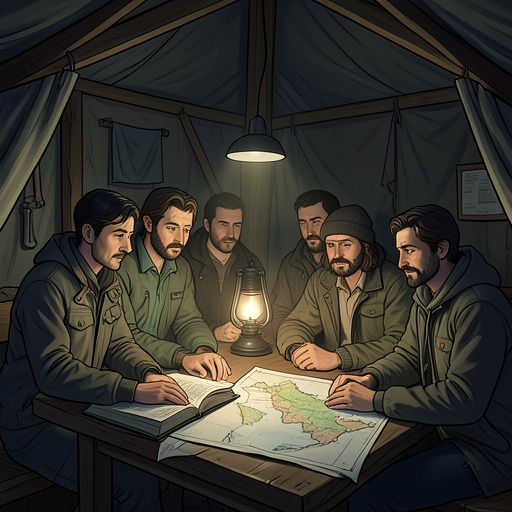
American WomanThe cadre is the revolutionary group at the center of Pauline’s kidnapping and the fugitives’ subsequent operations. It seeks to make private wealth and political power answerable to the poor, presenting its actions as part of a wider struggle against capitalism and state violence. Yet its campaign depends on coercion, secrecy, and resources borrowed from people beyond the group. Its history is therefore not only a sequence of political actions: it is also a record of how collective purpose strains against personal loyalties, public judgment, and the practical demands of survival.
Identity and Political Aims
The cadre treats political struggle as an international cause, identifying itself with freedom fighters beyond the United States. Its members understand their work as resistance to larger structures of power, but the group’s methods make that claim difficult to separate from the immediate harm and fear its actions cause. The kidnapping of Pauline is intended to give the organization a public symbol and leverage over her wealthy family. The demands combine an ideological argument with a concrete program: a week’s worth of healthy food for people in California living below the poverty line or facing specified forms of social marginalization. Distribution is to last at least a month, take place without conditions, and avoid government social-service centers and other record-keeping institutions. The food is described as a goodwill gesture preceding ransom negotiations, not as the ransom itself.
The demand is elaborate, extending across multiple pages of principles, social analysis, and claims of ideological connections to other revolutionary movements. Its scale, however, leaves it vulnerable to practical and political challenge. Pauline’s father publicly treats the request as too vague to calculate, while his advisers estimate that the food could cost half a billion dollars. His response presents the family as trying to comply while also making the demand appear unworkable. Left-leaning commentators, meanwhile, criticize the proposal as paternalistic and disconnected from the actual needs of the people it claims to serve. Jenny hears the group’s political standing questioned, and feels both shame and defensive attachment to its cause. The episode shows the gap between the cadre’s intended image of principled selflessness and the public’s reading of its actions as impractical spectacle.
Recruitment and Internal Loyalties
The cadre’s internal structure is shaped by debate, voting, and the effort to make its membership serve tactical needs. When the group has eleven members, its leader raises the possibility of admitting Pauline. The number twelve appeals to the members as a practical arrangement: it can be divided into four groups of three, a formation they regard as useful in combat. Nine members, including the leader, vote to admit her; Juan and Yvonne vote against. Pauline’s admission follows a gradual expansion of trust. The group first allows her to see its members’ faces, then gives her greater freedom and eventually lets her take part in meetings and offer advice as ransom talks falter.
Her admission does not settle her place within the group. Juan and Yvonne have been her most scornful captors and resist the privileges she gains. They question whether she would stand firm if the group were ambushed or captured, and deride her perceived weakness. Their opposition is inseparable from their own position in the cadre: although they have rejected conventional marriage vows, their loyalty to one another repeatedly takes precedence over their allegiance to the group and its leader. They vote together, keep secrets, and appear to act as a unit even when they deny doing so. The organization’s opposition to monogamy does not dissolve this attachment; instead, the couple’s bond becomes a recurring source of conflict with other members.
Pauline’s public usefulness complicates that conflict. Her taped declaration of commitment attracts notice in the press and on the streets, altering how the cadre is perceived. The group had risked appearing inept and isolated after its first major action; Pauline’s words give it renewed visibility and make her, in the group’s eyes, an important symbol. That new status coexists with her precarious acceptance. Juan and Yvonne resent the attention, while the group’s wider tactical and political needs make Pauline valuable. The cadre can recognize her as a comrade without erasing the coercive circumstances in which she entered its orbit.
Structure, Operations, and Dependence
After the bank robbery and flight to Los Angeles, the long-discussed division into four three-person combat cells is put into effect. Juan, Yvonne, and Pauline are assigned to the same cell. The leader describes the separation as necessary because the tensions among them threaten the group; it is both a test and a punishment. Their first joint task is an ordinary supply run, prompted by a cold spell, illness among the members, and the possibility that the group will have to leave the city for the woods. They are to obtain basic supplies and price camping equipment. Even this routine errand reveals how the organization’s clandestine life shapes everyday conduct: the three travel in altered clothing, carry concealed weapons, and take steps to hide the weapons in their van.
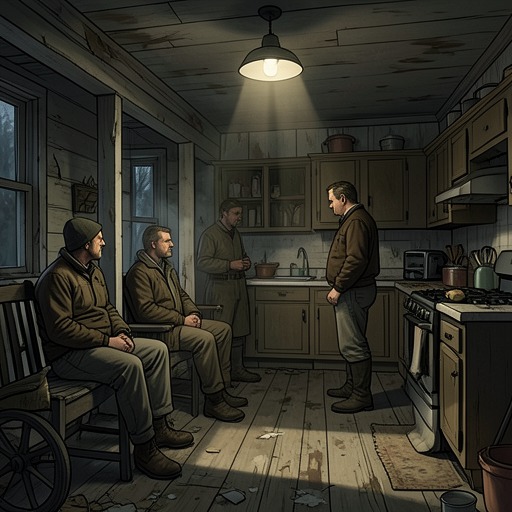
The cadre’s ability to move depends on a wider network of money, transport, shelter, and personal contacts. After its losses in Los Angeles, the surviving members relocate through a series of improvised arrangements. Frazer organizes the staggered movement of Pauline, Yvonne, and Juan, arranges a new farmhouse safe house through Carol, and has Tom oversee the storage of the group’s guns with Frazer’s old friends. Those weapons are held for possible future recovery, but the arrangement also makes the group dependent on people whose continuing loyalty Frazer cannot confidently judge. The fugitives’ secrecy rests on relationships that can shelter them while also leaving traces between them.
That dependence continues beyond the cadre’s immediate operations. When Jenny and Pauline run short of money, Jenny contacts Mike through Tom. Mike recognizes Jenny despite her disguise and gives her five hundred dollars. This assistance is not an action by the cadre itself, but it shows the resource network on which the fugitives’ survival depends after the group has been broken apart. Personal ties provide money and transport where the organization no longer can; the same web of acquaintances later helps investigators connect people and places.
Loss, Survival, and Leadership
The deaths of cadre members in Los Angeles leave the three survivors—Juan, Yvonne, and Pauline—to confront both grief and the loss of their former structure. They watch a live television report on the siege from a motel room. Pauline is overwhelmed by what she sees and retreats alone to the bathroom. Later that night, without a dispute over succession, the survivors agree to make Juan their new leader. Their decision is less a return to the cadre’s earlier, complicated political program than an immediate commitment to preserve one another. The surviving trio’s shared experience has become a bond strong enough to carry them through further displacement and danger.
Their later conduct remains politically and morally uncertain. The survivors sometimes interpret their predicament through successive explanations of responsibility: their own crimes, Juan and Yvonne’s influence, Frazer’s assistance, government persecution, and the larger legacy of imperial violence. These explanations do not simply absolve them. The narration presents them as aware that their appeals to victimhood can serve their self-regard, even as they continue to see political struggle as a duty. The cadre’s members have not arrived at a stable account of what their actions mean; their beliefs remain entangled with guilt, fear, and the desire to be judged.
Public Record and Narrative Legacy
The cadre’s political identity is preserved in records that are also compromised evidence. The group’s tapes and handwritten pages include Pauline’s account of her joy at being admitted, material that can be set against her later descriptions of captivity and disillusionment. Jenny writes that Pauline had always been a captive and that her actions were against her free will, but a judge rejects the statement as a cynical legal ploy. The written record cannot resolve the conflict between Pauline’s coerced beginnings, her participation, and her later claim that both the cadre and her parents used her.
In Anne’s view, the group and its dead members risk being forgotten, along with what they opposed and hoped to achieve. Pauline, by contrast, remains at the center of public attention because a forthcoming trial promises a definitive account. The cadre is thus remembered less through a settled history of its political aims than through competing accounts: its own propaganda, hostile or skeptical commentary, legal argument, and the changing testimony of people who survived it. Its central contradiction endures in those records. The group sought to make Pauline a symbol, but her experience exceeds the meanings it assigned to her, just as the history of the cadre exceeds the slogans by which it tried to explain itself.